Wednesday, 5 May 2010

OUR OPENING SEQUENCE 'THE MAN WITH NO FACE'

As I came to college at the beginning of the January I joined Katie Leuw's group late as she needed to re-shoot her project. Katie already had a story line that she introduced me to, the film was going to be called 'The Man With No Face' the main character being a sad lonely depressed boy who is attached to his diary.. this showing that he is not a typical stereotype of a boy but sensitive and emotional. Our feature film leaves us seeing the boy running away and walking down the street alone. The plan for the rest of the film is that the boy who feels so sorry for himself, meets a Man with a distorted face who tells his tragic story. This is why the film is called ' The Man With No Face' the boy is inspired by this man and starts to appreciate his life.

We worked together to create the voice over for our film. We then had everything planned and was ready to shoot. We took the camera and the tri-pod to Katies house where we started to shoot our opening sequence for our feature film. I was happy with what we shot. However when we were editing our film that we had - on final cut pro we realised that some of our shots were unfocused and shaky. For example the shot of the house at the begging of our film the tripod was unbalanced. So we were off back to Katie's house to re-film what we were not happy with. I feel we worked effectively and after a lot of time editing i was happy with our final product.

personal contribution:
Katie and I shared our roles, as we had to re film we switched jobs. For most of the shots Katie was controlling the camera and i was directing James (our character) and telling him what to do. As the professional editing softwares were new to both of us. We both took the responsibility to learn how to use it. This allowed us to work on our film when we weren't together in class.

FINAL PRODUCT ' THE MAN WITH NO FACE'

Friday, 30 April 2010

PRE-PRODUCTION (ORGANISATION)


Location options:
Stereotypically we associate the teenagers with troubles to be from working class backgrounds, however we wanted to show the contrast of this. The pictures above are images of different suburban middle class houses that we are thinking of using for our location to film.


Final Location:

chose for final location: The house above (our final location to film) is the biggest house, this will help create the sense of isolation, a feeling our character has. The house also has an accessible balcony which we are considering using for our film. Katie and I agreed that this house is the most visual appealing and perfect for where we wont to film.


editing: we will use continuity editing. The tempo will be slow ‘contemplative’ this will reflect the negative mood of the character.


equipment: camera, tripod


Dialogue:a voice over of our main ‘depressed’ character


Music:soft, slow, sad music creating the mood and forcing the audience to sympathise


Costumes:our aim is to create the stereotype of a “loser" his costume will represent him as having no personality nor style.


actor: James Alculmbre, a drama student- he fits the description we are looking for


character break down: Our character is a sad, lonely depressed teenage boy, living in a middle class. Doesn't seem to have anything going in his life. He introduces the audience as having no friends, he has school/family problems that many teenagers can relate to- this will be a key selling point. He leaves his personal feelings in a diary something he is clearly attached to. We have chosen 'not the best looking boy' this as well as his sad face and situation will help create sympathy.


final script:


Friday, 23 April 2010

DEVELOPMENT- OF OUR FILM


brief story line:
Our opening sequence will start of with our main character (teenage male living in a middle class home) writing in his diary.. at this time the audience will be hearing his thoughts he will explain he does not like his life, he has no friends, and troubles at home. We then will hear a background sound of his parents arguing this leads the already unhappy boy to pack his bag and sneak out of his home. There is where our opening sequence will end. The plan for the rest of the story is for the boy to meet a man with a distorted face, the man tells his tragic story the boy is inspired by this and goes on to start realising how good his life really is.

our aim is establish situation, character and to provoke emotion. We plan to create enigma, leaving the audience with a few questions and wanting to watch more.


PLAN FOR VOICE OVER

In the space of 2 minutes for my feature film Katie and i have planned to have a voice over of our main character (Daniel) so we get a insight into the mind of this young depressed boy he will be describing himself as miserable and friendless.


RESEARCH- ABOUT A BOYS VOICE OVER

The voice over from “About a boy” has caught my eye, a movie staring Nicholas Hoult who plays the role of Marcus- a similar character we are aiming for. This is the script of the voice over of Marcus.


IDEAS FOR CREDITS:


STORY BOARD:


SHOT LIST:


ANIMATIC:
we created this by uploading our story board to a program called Image Ready. We had to make each box the same size and put them into order, then we uploaded it on photo-bucket.


Katie Leuw,didi finlay AS media Fine arts

audience: we plan for our film to attract a wide audience with a 12A certificate this is because it will contain swearing etc. our audience will reach 12-20 year olds with the majority of the audience being male, this is because they will be able to relate to our lead character- who is also male.

FILM PRODUCTION

Key Roles

- Director

- Producer

- Writer

- Editor

- Cinematographer

- Sound recording


Equipment

- Is the camera charged?

- Do we have the charger cable?

- Do we have enough tape?

- Is the tripod working?


Props/Costumes/Make-up

- Who is responsible for props?


Director

- Storyboard/shot list

- Directs actors

- Ensures you get what you planned


Producer

- Overseas

- Ensures project is delivered on time

- Schedules + plans the shoot and post production


MIS-EN-SCENE

  1. A director might use historical locations to establish where you are in the time period that the show/film is set.
  2. They will use locations to show the audience where the show/film takes place and so that the audience understand the social status.
  3. Common Place props are often used for authenticity.
  4. Noteworthy props are props that are key to the narrative of the story.
  5. Costumes are used to understand the character, there social status and the time period.
  6. Stars and Actors get the audience to expect the film to be good because it has a big star and people can expect a good performance.
  7. Unknown character actors are effective for making the audience think that the film will be faithful to the text and directors cast them not because they are stars but because they fit the character that they are going to play.
  8. Low key lighting is used to read the text as being somber and moody.
  9. High key lighting is used to allow the audience to see the action clearly and to read the text as if it were natural light.
  10. Colours are used to read the dramatic mood of the scene.

FIVE STAGES OF MEDIA PRODUCTION (Film)


1) Development and research (end of this stage script ready to go)

2)
Pre-production - preparing for production
. Storyboarding/shot lists
. Loccations
. Casting
. Scheduling - Location list
- Prop list
- Costumes
- Equipment
- Actors/extras
- Make-up
- Sound effects
. Budgeting
. Testing - camera and sound
. Sounds

3)
Production - filming

4)
Post-production Editing picture + sound)

5)
Distribution + Exhibition

RESEARCH- film analyses of opening sequences


MY SISTERS KEEPER:

This is the story board for ' My sisters keeper" this movie is very depressing the music follows this theme- very quiet instruments playing very low in the background of the girl narrating. She tells her past and is shows a montage sequence of when she was little and we get emotionally effected as we have to image what she went through.The writing is very small in each board and is in white. This might show the purity of this girls life and how she has to deal with an emotional situation. This film is a Drama that deals with family relationships, rebellious daughter, tragedy cancer. The film is based on a novel. The second frame on this board is of the main girl when she is older, upset as she is being forced into something she doesn't want to do. In the last frame it is her when she is younger enjoying herself and laughing which shows how much has changed during such a short period of time.


ABOUT A BOY:
We can see that this is a universal studio, Working title film. An independent film distributor. We are first introduced to one of the main characters we hear his voice and about his life. You can immediately tell he is quite well off. And is basically unhappy with his life. There is then a Jump cut to a boy laying in bed. We hear his voice over this allows has to compare them. This young boy is not well off, but similarly he is not happy with his life he is unhappy at school and is bullied. The voice over is a technique we want to use in our feature film. This film is a delicate balance between comedy and drama.The use close ups in this opening sequence which immediately provokes the audience to sympathise. A story of two 'boys' who help each other- one to cope with insecurity and bullying, the other to grow up.


MEAN GIRLS:

watch opening sequence (Only Watch First 2 Mins)

we immediately know its created by paramount pictures in this opening scene. The film starts with two sets of titles and are then introduces to a young teenage girl (kady) who starts to tell the audience about herself and her life. We are then quickly told her name and that she she has moved to America from Africa to attend her first year of school. The music continually changes, it matches what we see when we see pictures of Kady in Africa, it then changes when Kady enters the school for the first time to a typical upbeat American song- this is often used to help exaggerate the setting of the scene. The camera shots that are used are medium shots, medium closeups, long shots and extreme long shots. Eg the start of the film begins with a MS but the angle used is low but gradually moves into an eye level frame. They have used famous actors that teenage girls are already familiar with and the audience is introduced to this film in an intriguing way by its unique story line it shows the similarities as well as the important differences this movie has with other typical teenage dramas.


Camera shots, angles and movement


XLS -the view is so far from the subject that she isn't even visible. This is often used as an establishing shot

LSt - shows the entire object or human figure and is usually intended to place it in some relation to its surroundings

MLS - a shot of the person knees up

MS - a shot of the person waist up

MCU- a shot of the person's face and shoulders

CU- a shot of the person's face, this is normally used to show the emotion and reaction of a person\


Angles:

hight angle

low angle

canted angle


Movement:

pan

tilt

track

dolly

crane

steadicam

handheld

zoom

reverse zoom


Composition:

framing

rule of thirds

depth of field;

deep and shallow focus,

focus pulls


Shot Sizes Key:

XLS- Extra Large Shot

LS- Large Shot

MLS- Medium Large Shot

MS- Medium Shot

MCU- Medium Close Up

CU- Close up

BCU- Basic Close up

XCU- Extra Close Up

PRELIMINARY TASK


The clip above is my Preliminary Task. Firstly i had to create a story board and a script, i had to right down step by step what i wanted my actors to do. I had to decide what shot sizes and camera movement i wanted. This task was to help us understand these new techniques that we have learnt about (and have written about above) and allowed me to put them to use. There are examples in my clip of all these rules/techniques. This helped us prepare for the filming of our 2minute feature film. My first attempt of this preliminary task failed. This being due to the fact that i was unfamiliar with the cameras, and although i applied these new techniques, my first clip was not completely in focus and i did not have a variety of angles and shot sizes. So i had to ask Katie and Ryan (my actors) to re-act out the scene. I had to instruct them- tell them what i wanted them to say, how to act. etc.. to create my scene. This gave me a ttaste of what i would have to do as the director for our 2 minute feature film. I then had to edit all the film i had on final cut pro- a professional editing software, upload it to YouTube, so i could then upload the link to my blog.

SCRIPT FOR PRELIMINARY TASK:

ORIGINAL STORY BOARD:


ANAMATIC:


Katie's Anamatic

Thursday, 14 January 2010

Five Favourite Movies

Titanic- romance/ tragedy
imdb link

Mean Girls- Comedy/Drama
trailer link
imdb link


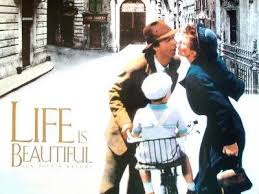
Life is Beautiful- Drama

http://www.imdb.com/title/tt0277799/


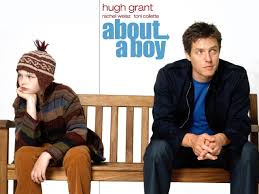
About A Boy- Comedy, Drama, Romance

http://www.imdb.com/title/tt0276751/


Grease

Grease- Comedy/musical/romance


The 30° rule

The 30° rule is a basic film editing guideline that states the camera should move at least 30° between shots of the same subject. This change of perspective makes the shots different enough to avoid a jump cut. Too much movement around the subject may violate the 180° rule.

Shot reverse shot

Shot Reverse Shot is the opposite angle of the original shot another word for it is shot/counter shot. It is a film technique where one character is shown looking at another character and then the other character is shown looking 'back' at the first one. This means the viewer assumes that they are looking at each other.